Fashion moves ridiculously fast.
One week everyone seems obsessed with oversized tailoring. The next, fitted jackets are supposedly back. Your social feed introduces another microtrend, another “essential” shoe, and another aesthetic that apparently requires replacing half your wardrobe.
It can make finding your personal style feel harder than it should.
Vogue noted in 2026 that the constant cycle of microtrends can make developing an individual sense of style especially confusing. Instead of simply asking whether we like something, we are frequently encouraged to ask whether it is currently fashionable.
But personal style is not about discovering one magical aesthetic and following its rules forever.
It is about understanding which clothes make you comfortable, confident, and recognisably yourself. Your lifestyle, favourite colours, preferred silhouettes, budget, climate, and personality all play a role.
And once you understand those things, trends become options rather than instructions.
Start With the Clothes You Already Love
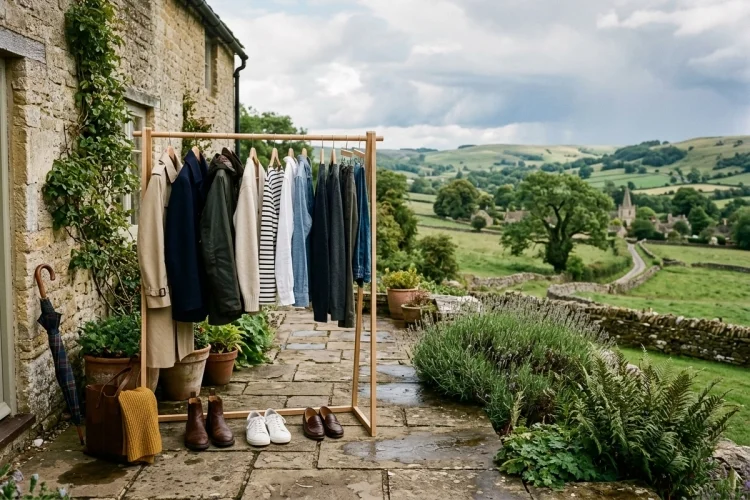
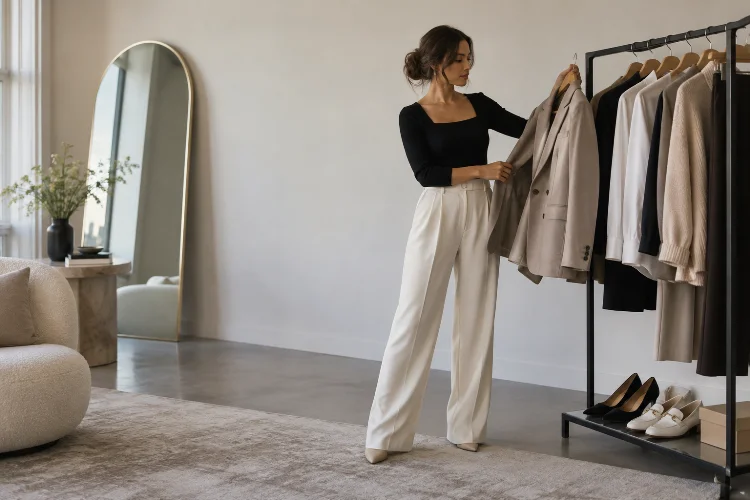
Before creating Pinterest boards or buying anything new, open your wardrobe.
Your existing clothes contain more information about your style than most online quizzes ever will.
Pull out the pieces you repeatedly wear. Maybe it is straight-leg jeans, relaxed button-down shirts, black trousers, colourful knitwear, oversized jackets, midi skirts, or plain white trainers.
Then ask why you like them.
Maybe a certain pair of trousers makes you feel polished without being uncomfortable. Perhaps you repeatedly choose dark colours because they combine easily. Maybe you love structured jackets because they make even a basic T-shirt feel intentional.
Vogue’s advice on developing personal style similarly encourages examining your favourite clothes and asking why the colours, shapes, or overall look make you feel good.
Patterns will start appearing surprisingly quickly.
Those patterns are the beginning of your personal style.
Separate Inspiration From Trends
There is nothing wrong with enjoying trends.
Fashion would become incredibly boring if everyone decided trends were forbidden.
The problem appears when inspiration turns into obligation.
You see someone wearing barrel-leg jeans beautifully and immediately decide you need them, despite having spent the previous decade happily wearing straight-leg trousers.
Or a minimalist neutral wardrobe becomes popular, so you suddenly remove every bright colour from your closet even though colourful clothes have always made you happy.
Harper’s Bazaar describes personal style as something closely connected to individual identity rather than simply owning whatever aesthetic happens to be fashionable.
Fashion experts interviewed by the publication also emphasised instinct and self-knowledge as important parts of developing style.
Save outfits you genuinely like, but look for repeated elements rather than copying complete looks.
You may realise that almost every saved outfit includes relaxed tailoring, leather shoes, simple jewellery, or earthy colours.
That information is more useful than knowing the name of the latest aesthetic.
Find Your Three to Five Style Words
One useful exercise is describing your ideal wardrobe in a few words.
Keep them broad enough to guide you without creating another restrictive rulebook.
Your words might be:
Relaxed, polished, practical, minimal, playful.
Someone else might choose:
Romantic, colourful, vintage, feminine, creative.
These words become a filter when shopping.
Imagine you find a dramatic sequinned jacket during a sale. It looks great, but if your wardrobe is mostly understated, practical, and casual, ask whether you would genuinely wear it or whether you simply enjoy looking at it.
There is a difference between appreciating clothes and wanting them in your actual life.
You do not need every beautiful thing you see.
That realisation can save a suprising amount of money.
Pay More Attention to Fit Than Fashion Rules
People often search for rigid instructions about dressing for a particular body type.
Wear this if you are tall. Avoid that if you are short. Create curves here. Hide something there.
These rules can become exhausting.
Fit is more useful.
Stitch Fix notes that traditional body-shape rules can be unnecessarily restrictive and suggests treating them as starting points rather than absolute instructions. Ultimately, people should focus on clothes that fit comfortably and make them feel good.
Experiment with proportions.
Try cropped versus longer jackets. Compare wide-leg trousers with straight cuts. See whether you prefer fitted tops with loose bottoms or relaxed shapes from head to toe.
Take mirror photos.
Sometimes an outfit feels strange while you are wearing it but looks balanced in a photo – or the opposite.
Over time, you develop your own understanding of proportion without needing somebody else’s list of fashion commandments.
Create a Few Reliable Outfit Formulas
People with recognisable style often repeat themselves.
That is not a failure of creativity.
It is one of the easiest ways to make getting dressed simpler.
An outfit formula is a combination you already know works. It might be wide-leg trousers + fitted T-shirt + loafers, or jeans + oversized shirt + trainers.
Perhaps your winter formula is a knit sweater + straight trousers + long coat + boots.
You can change colours, textures, accessories, and individual pieces while keeping the overall structure.
Stylist Karla Welch describes a capsule wardrobe as a small group of essential pieces that work together across different situations, with the exact selection depending on the individual’s life and preferences.
You do not need an extremely minimalist capsule wardobe.
Just identify your most dependable combinations.
When Monday morning arrives and you have eight minutes to get dressed, those formulas are much more helpful than remembering what was trending on social media yesterday.
Build Around Your Actual Lifestyle
A stylish wardrobe that does not suit your life is basically a costume collection.
Imagine someone who works from home, walks frequently, and rarely attends formal events.
Owning ten pairs of uncomfortable heels and six structured office suits probably makes little sense, even if those items look fantastic online.
Look at how you actually spend your week.
If most of your life is casual, most of your wardrobe should probably support casual dressing. If your job requires business clothing, invest more attention there.
Climate matters too.
There is little point building your identity around heavy layering if you live somewhere hot and humid most of the year.
Personal style becomes much easier when clothes work with your routine instead of fighting it.
Shop for Gaps, Not Entertainment
Shopping can easily become entertainment.
You scroll through an online store because you are bored, discover something you did not know existed ten minutes ago, and suddenly feel that your life is incomplete without it.
A better system is keeping a short list of genuine wardrobe gaps.
Maybe you need comfortable black trousers because your existing pair is worn out. Perhaps your outfits regularly need a lightweight jacket, or you keep wishing you owned simple brown shoes.
Shop for those things first.
This approach also reduces unnecessary clothing consumption. UNEP has highlighted overproduction and overconsumption as major challenges in the fashion industry and encourages keeping clothing in use longer through reuse, repair, and more thoughtful purchasing.
Before buying something, imagine at least three realistic outfits using clothes you already own.
If you cannot, the item may become one of those mysterious garments that lives untouched in your closet for four years.
Stop Expecting Your Style to Stay the Same Forever
Finding your personal style does not mean choosing one aesthetic at 25 and wearing it until retirement.
Style changes because life changes.
Jobs change. Bodies change. Budgets change. Relationships, hobbies, cities, climates, and confidence levels change.
Even fashion itself changes how we see familiar clothes.
The goal is not to freeze your wardrobe in time.
Instead, build a strong enough foundation that new influences can be added without completely replacing your identity.
Maybe you suddenly love a trendy red bag.
Great.
Wear it with the jeans, shirts, jackets, and shoes you already love instead of deciding you now need an entirely red-themed wardrobe.
Trends work best when they enter your style rather than replacing it.
Give Clothes Enough Time Before Declaring Them Wrong
Some purchases are instant favourites. Others require experimentation.
Before deciding that a garment does not work, try styling it several different ways.
Change the shoes. Tuck the shirt differently. Roll the sleeves. Add a belt. Wear a jacket over it. Pair it with something unexpected.
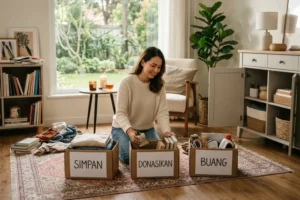
A closet edit can also help reveal which garments deserve keeping, repairing, reselling, or donating.
Vogue’s wardrobe-cleanout guidance recommends pausing new purchases, defining your style intentions, and sorting existing clothes thoughtfully rather than immediately shopping for replacements.
Clothing longevity matters beyond personal convenience, too. WRAP has found that extending garment lifespans can reduce the environmental impacts associated with producing and replacing clothing.
Learning to rewear something creatively is often more stylish than constantly replacing it.
Use Trends as Experiments, Not Commitments
You absolutely can try trendy pieces.
Just test them selectively.
Accessories are particularly useful because they can change an outfit without requiring a complete wardrobe overhaul. Shoes, scarves, jewellery, bags, sunglasses, or even a different colour can introduce something current.
If you still love the trend after several months, it may naturally become part of your style.
If not, you have learned something.
Personal style develops through trial and error. Some experiments work; others make you wonder what exactly you were thinking.
Both are usefull.
The important thing is noticing what you genuinely enjoy instead of letting algorithms make every decision for you.
Finding your personal style is not about discovering the perfect aesthetic or rejecting trends completely.
It starts with paying attention.
Notice which clothes you wear repeatedly, which silhouettes feel comfortable, which colours make you happy, and which outfits actually suit your everyday life. Build dependable outfit formulas, shop for real gaps, and allow your preferences to evolve over time.
Most importantly, stop treating every fashion trend as an assignment.
Try new ideas when they genuinely interest you and ignore them when they do not. Open your wardrobe this week, choose five outfits you already love, and look for the common thread between them.
Your personal style may already be there. You simply need to recognise it.