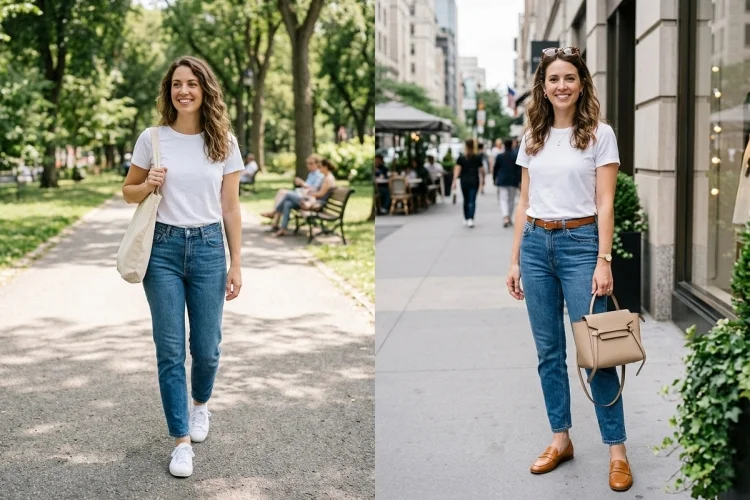
A plain T-shirt and jeans can look completely different depending on what you wear with them. Add clean trainers and a canvas tote, and the outfit feels relaxed.
Replace them with loafers, a structured bag, and a polished watch, and the same clothes suddenly look much smarter. That is the power of accessories.
Learning how to choose accessories that transform a simple outfit is not about adding as many items as possible. It is about selecting a few details that create colour, texture, structure, or personality without making the overall look feel confused.
Accessories can include jewellery, shoes, bags, belts, scarves, sunglasses, watches, hats, and even socks. They may serve a practical purpose, but they also act as finishing touches that can bring new energy to familiar wardrobe basics.
The best accessories do not compete with your outfit. They help it feel more intentional.
1. Decide What You Want the Outfit to Say
Before choosing an accessory, think about the mood you want to create.
A simple black dress can look professional with a structured handbag and understated jewellery. The same dress can feel playful with colourful earrings and bright shoes, or relaxed with trainers and a crossbody bag.
This means accessories should be chosen according to the occasion, not only because they look attractive on their own. A dramatic necklace may work beautifully for dinner but feel distracting during a formal business meeting.
Ask yourself whether you want the outfit to look polished, casual, creative, elegant, bold, or practical. Once you know the direction, choosing the right details becomes much easier.
Your accessories should support the story of the outfit rather than introduce several unrelated stories at once.
2. Choose One Main Focal Point
One of the simplest ways to style accessories is to choose one item as the main focus.
This could be a statement necklace, a bright handbag, oversized sunglasses, a patterned scarf, or distinctive shoes. The other accessories should support that feature rather than fight for attention.
For example, if you are wearing large sculptural earrings, you may not need an equally dramatic necklace. A simple ring or watch can complete the look without making the upper half feel crowded.
A basic white shirt and dark trousers become more interesting when paired with one bold red bag. Because the clothing is neutral, the accessory receives enough visual space to stand out.
However, this is not a strict rule. Maximalist styling can include multiple bold elements, but they still need a shared theme such as colour, material, or mood.
Even highly layered accessory looks tend to feel more intentional when the pieces have some visual connection.
3. Use Colour Without Overcomplicating the Outfit
Accessories are an easy way to experiment with colour because they usually require less commitment than a bright coat or pair of trousers.
Start by repeating a colour that already appears in your outfit. If your shirt contains a small green stripe, a green bag or scarf can make the entire look feel more connected.
You can also use a contrasting colour to create energy. Navy clothing may look fresher with orange, burgundy, or yellow details. A beige outfit can become more expressive with cobalt-blue earrings or a red belt.
If your clothes already include several colours or patterns, quieter accessories may create better balance. Neutral leather, simple metallic jewellery, and plain shoes can prevent the outfit from becoming visually overwhelming.
You do not need to match every accessory exactly. Shoes, bags, and belts can belong to the same general colour family without being identical. Slight variation often looks more natural than a perfectly matched set.
4. Pay Attention to Scale and Proportion
The size of an accessory affects how balanced an outfit appears.
A tiny handbag may look stylish with a fitted evening outfit but impractical beside a large winter coat. Similarly, a delicate necklace can disappear beneath a chunky jumper, while a heavier chain or pendant may create better visual balance.
Consider the shape and volume of your clothing. Loose, oversized garments can often support larger accessories, while a fitted or detailed outfit may work better with smaller pieces.
Necklines matter too. A long pendant can fill the open space created by a plain high-neck top, while a shorter necklace may sit more naturally above a V-neck or open collar.
Bag size should also suit your frame, outfit, and practical needs. The goal is not to follow a rigid body-shape rule. It is to make sure the accessory looks connected to the overall scale of the clothing.
Stand in front of a full-length mirror before leaving. If one piece seems unusually heavy, tiny, or disconnected, try changing its size or removing it.
5. Add Texture to Plain Clothing
Simple outfits often become more interesting when accessories introduce texture.
A woven bag can soften a crisp summer outfit. A suede belt can add depth to denim and a plain shirt, while polished metal jewellery creates contrast against soft knitwear.
Other useful textures include leather, canvas, silk, wool, beads, pearls, raffia, velvet, and hammered metal. You do not need to use several at once. Even one textured item can make basic clothing feel more considered.
A plain cream jumper and black trousers may look minimal on their own. Add a patterned silk scarf or textured leather bag, and the outfit gains detail without needing another layer of clothing.
Texture is particularly helpful when your outfit uses only one or two colours. A monochrome look can still feel rich when it combines smooth fabric, knitwear, metal, and leather.
6. Let Shoes and Bags Set the Level of Formality
Shoes and bags are among the most powerful accessories because they can change the mood of an outfit immediately.
Jeans and a plain top look casual with running-style trainers and a backpack. Add loafers and a structured shoulder bag, and the combination becomes suitable for a smart-casual office or lunch meeting.
For evening wear, a compact bag and sleek shoes can make simple clothing feel more polished. Meanwhile, boots and a larger crossbody bag can give the same outfit a practical, relaxed character.
Choose shoes according to both appearance and comfort. An outfit will not feel successful if you cannot walk comfortably or spend the day adjusting your footwear.
Bags should also match your real needs. A small clutch may be attractive, but it is not useful when you need to carry a laptop, water bottle, and umbrella. Practicality is part of good personal style.
7. Use Belts and Scarves in More Than One Way
Belts do more than hold up trousers. They can introduce colour, define the waist, or give structure to loose clothing.
Try adding a belt over a dress, cardigan, long shirt, or blazer. A slim belt creates a subtle finish, while a wide or decorative style can become the main feature of the outfit.
Scarves are equally versatile. They can be worn around the neck, tied to a handbag, used as a hair accessory, or styled around the waist. Fashion editors regularly use scarves to add colour and individuality to otherwise minimalist outfits.
A scarf is also useful when you want to refresh familiar clothes without buying something new. One printed piece can create several different looks depending on how it is folded and tied.
Choose a pattern containing colours already present in your wardrobe. This makes the scarf easier to combine with multiple outfits.
8. Build a Small Collection of Versatile Accessories
You do not need a large accessory collection. A small group of reliable pieces can cover most situations.
Useful options may include simple everyday earrings, a watch, a medium-sized bag, comfortable trainers, smarter shoes, a neutral belt, sunglasses, and one colourful or statement piece.
Your exact selection should reflect your lifestyle. Someone who works in a creative office may wear bold jewellery frequently, while a person who spends most days outdoors may gain more value from a durable backpack, hat, and weather-resistant shoes.
Start by looking at the clothes you wear most. Choose accessories that improve those outfits instead of buying pieces for imaginary future occasions.
Versatile wardrobe staples tend to become more useful when they can be restyled with different finishing touches. Fashion editors often treat classic clothing as a foundation that can be refreshed through shoes, bags, jewellery, and seasonal details.
9. Buy Less, but Choose More Carefully
An inexpensive accessory is not automatically good value if it breaks quickly or only works with one outfit.
Before buying, inspect clasps, stitching, zips, straps, fastenings, and metal finishes. Think about how comfortable the item feels and whether it can survive regular use.
Second-hand shops and resale platforms can be excellent places to find scarves, jewellery, bags, belts, and watches. Reusing existing products can reduce waste and help you find distinctive pieces without relying on constant new purchases.
Durability also matters. WRAP highlights repair, maintenance, and longer product use as important parts of reducing the environmental impact of clothing and fashion items.
Do not buy an accessory simply because it is trending. Ask whether it suits your clothes, lifestyle, and personal taste. A piece you wear for several years is usually more valuable than something exciting for one month.
10. Care for Accessories So They Last
Even well-made accessories need basic care.
Store jewellery separately when possible so pieces do not scratch or become tangled. The Gemological Institute of America recommends keeping jewellery away from harsh chemicals and excessive exposure to heat or light, especially when it contains delicate stones or materials.
Keep bags supported while they are stored, and avoid overfilling them because this can stretch straps and distort their shape. Clean shoes according to their materials and allow wet footwear to dry naturally before wearing it again.
Repair loose stitching, broken clasps, or worn soles early. Small damage is often easier and cheaper to fix before it becomes a larger problem.
Good care allows your favourite accessories to keep transforming outfits instead of needing constant replacement.
Choosing accessories that transform a simple outfit is mainly about intention. Decide what mood you want, select one main focal point, and use colour, scale, and texture to make basic clothing feel more complete.
Shoes and bags can change the level of formality, while belts and scarves can reshape or refresh familiar garments. You do not need dozens of options; a small collection of versatile, comfortable, and durable pieces can create many different looks.
Start with one simple outfit from your wardrobe today. Try it with different shoes, a belt, jewellery, or a colourful scarf, then notice which detail creates the biggest improvement. The right accessory should not hide your style. It should help your style become easier to see.